
Calendar overview
Festival WhyNot #7 – 2020
Festival WhyNot #7
2020
22-25 Jan 2020
Bimhuis, Muziekgebouw, Stedelijk Museum, W139
After Movie:
-
DePolyband
Amos Ben-Tal & Gosse de Kort: A Question of Ma
BimhuisStart 20:30
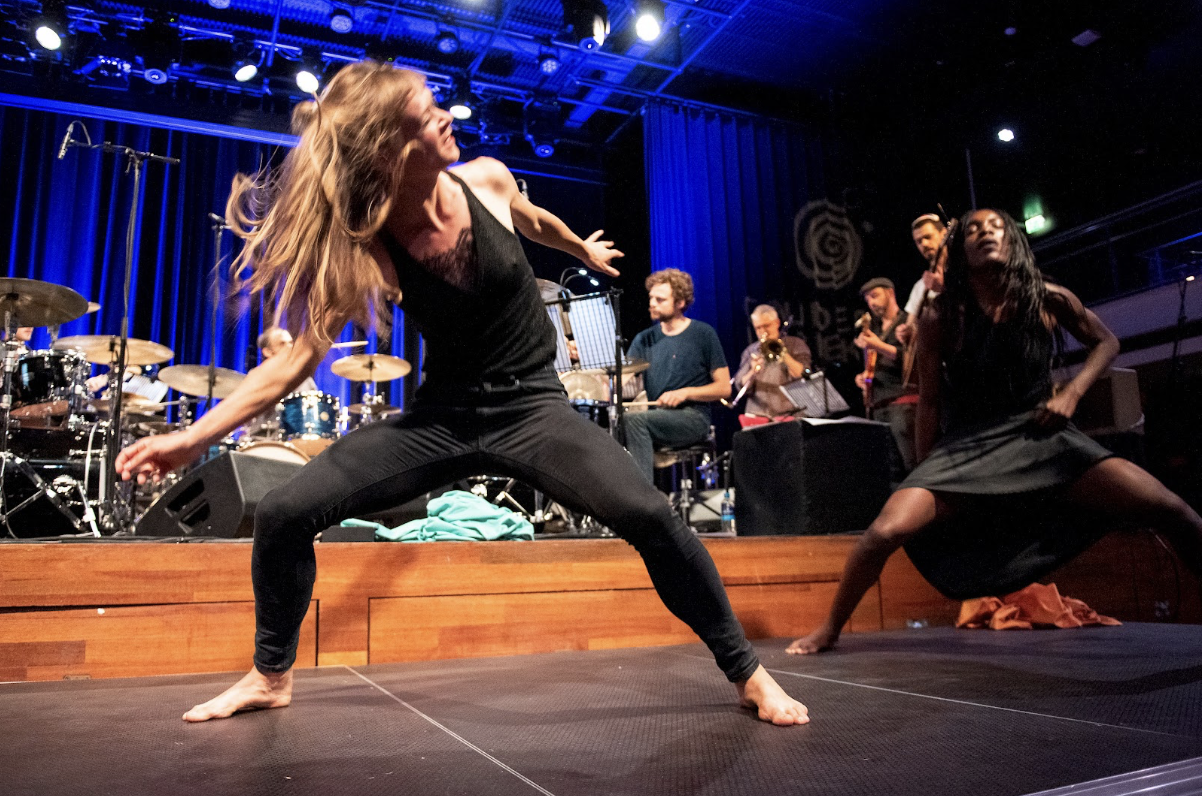
A hypnotic performance fusing dance and music, by a large ensemble led by Jasper Stadhouders and the performance installation A Question of Ma. A presentation of Festival WhyNot in collaboration with BIMHUIS and The Rest Is Noise.
PolyBand
The PolyBand is built around an ever expanding pool of musicians and performers. Together they create an amalgamation of sound and movements, where each member is equal. Its flexible instrumentation is built around a core of multiple electric guitars and drums, often augmented by accordion, bagpipes and keyboards, and often featuring guest musicians. Dance plays an important role in the performances. PolyBand is led by guitarist Jasper Stadhouders (also in Spinifex and Cactus Truck). Following memorable shows at Le Guess Who?, Transition and Lowlands, the band will now perform at Festival WhyNot!Amos Ben-Tal & Gosse de Kort: A Question of Ma
The evening starts in the atrium of Muziekgebouw with the WhyNot production A Question Of Ma, a performance installation by Amos Ben-Tal, choreographer and musician, and Gosse de Kort, an interdisciplinary artist with a background in architecture. This kinetic installation consists of various mobile elements, each spinning around its axis. A landscape of ever-shifting boundaries for who dancers to find a way through. scription text goes here -
Marc Vanrunxt & Slagwerk Den Haag: Drawings
Hugo Morales Murguía (new work)
Amos Ben-Tal & Gosse de Kort (installation)
20:15 - 22:00
Muziekgebouw aan 't IJ
The ancient Greeks already believed that the cosmos produced music. In 1967 they were proven right, when the first pulsar was discovered: a spinning dead star that emits a regular pulse. The discovery inspired Gérard Grisey to create a masterpiece for a percussion ensemble, called Le Noir de l’Étoile. Choreographer Marc Vanrunxt kneads it into a fascinating space trip for music and dance; composer/sonologist Hugo Morales Murguía counters it with a new work.
The sound of a pulsar provides the pulse of Grisey’s music, which propels the four dancers from Kunst/Werk and the musicians from Slagwerk Den Haag. Mexican Hugo Morales Murguía, who is now based in the Netherlands, made a composition for four percussionists with solar panels and a rotating light beacon as an 'answer' to Grisey. According to Marc Vanrunxt, the Drawings program is built around contrasts: *"The audible versus the inaudible; the visible versus the invisible; the perceptible versus the barely perceptible. It is a dive into the cosmos, the space surrounding us versus the unreachable.
The evening starts in the atrium of Muziekgebouw with the installation-version of A Question Of Ma by Amos Ben-Tal, choreographer and musician, and Gosse de Kort, an interdisciplinary artist with a background in architecture. This kinetic installation consists of various mobile elements, each spinning around its axis. A landscape of ever-shifting boundaries.
-
Jennifer Tee: DRIFT
Stedelijk Museum Amsterdam
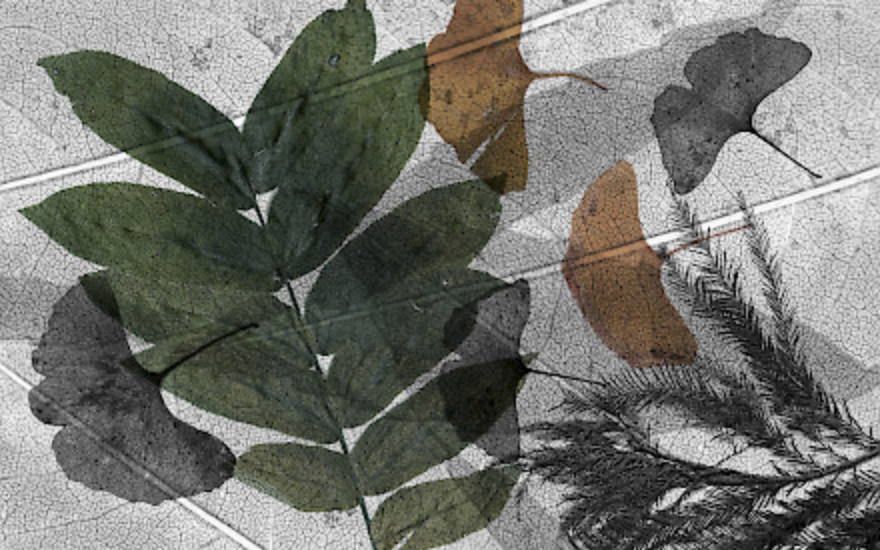
19:00 & 20:30WhyNot Festival and the Stedelijk Museum Amsterdam proudly present DRIFT, a new multilingual performance by Jennifer Tee. DRIFT takes inspiration from eco-poetics, a genre in which poets respond to the growing climate crisis through their use of language, mimicking ecological processes such as recycling and looping. In collaboration with poet Jane Lewty, Tee compiled a collection of poetry and novels—titled the "Eco-Poetics Stack of Books"—that focus on the vulnerable relationship between nature and culture, language and perception, beauty and destruction. Lewty assembled these publications into a new collage of poem-texts, read aloud by performers of diverse languages and nationalities, choreographed with the assistance of WhyNot Festival director Marjolein Vogels. Set against a backdrop designed by Tee, DRIFT explores how language plays into questions of land rights, nationality, belonging, and ecology.
Language is a system through which we discover and identify ourselves, both as individuals and collectively as a society, and has long taken a central role in Tee’s practice. Whether writing systems such as alphabets or pictographic characters, or as bodily movement or “body language,” communication in its many forms is of prime interest to Tee, and reflected in her visual art and choreographic practices, respectively. Further, while we experience political discourse through language, language also bears a politics itself: in a time of increasing globalization, the loss of land and language to colonization often go hand and hand, and mark a troubling march toward cultural homogenization. Tee proposes that a new poetic language is needed to discuss the intersectional relationship between the climate crisis and its increased impact on marginalized communities.
About Jennifer Tee:
Jennifer Tee works across sculpture, installation, performance, and collages. Her work is the exploration of a continuous dialogue between material experimentation and philosophical contemplation. Often working with charged cultural artifacts and symbols, she opens dialogues between instilled esoteric ideas and the materiality of objects she engages, evoking the cultural landscapes of Western art history and Eastern philosophy.Tee pairs her diverse points of inspiration to form new dialogues and encounters, bringing together disparate formal and conceptual references such as Hilma af Klint, Wassily Kandinsky, and Taoist magic. Embracing their duality, the works hover between their material and their laden meaning. Tee has exhibited in exhibitions and biennials throughout the world, most recently participating in the 33rd Bienal de São Paulo (2018) and the 16th Istanbul Biennial (2019).
Credits:
artist Jennifer Tee | choreopgraphy Marjolein Vogels | performers Miri Lee, Ayhan Karaağaç, Christian Guerematchi, Lív Smáradóttir, Aika Goto, Björk Níelsdóttir
WhyNot @W139
Sat 25 January 2020
-
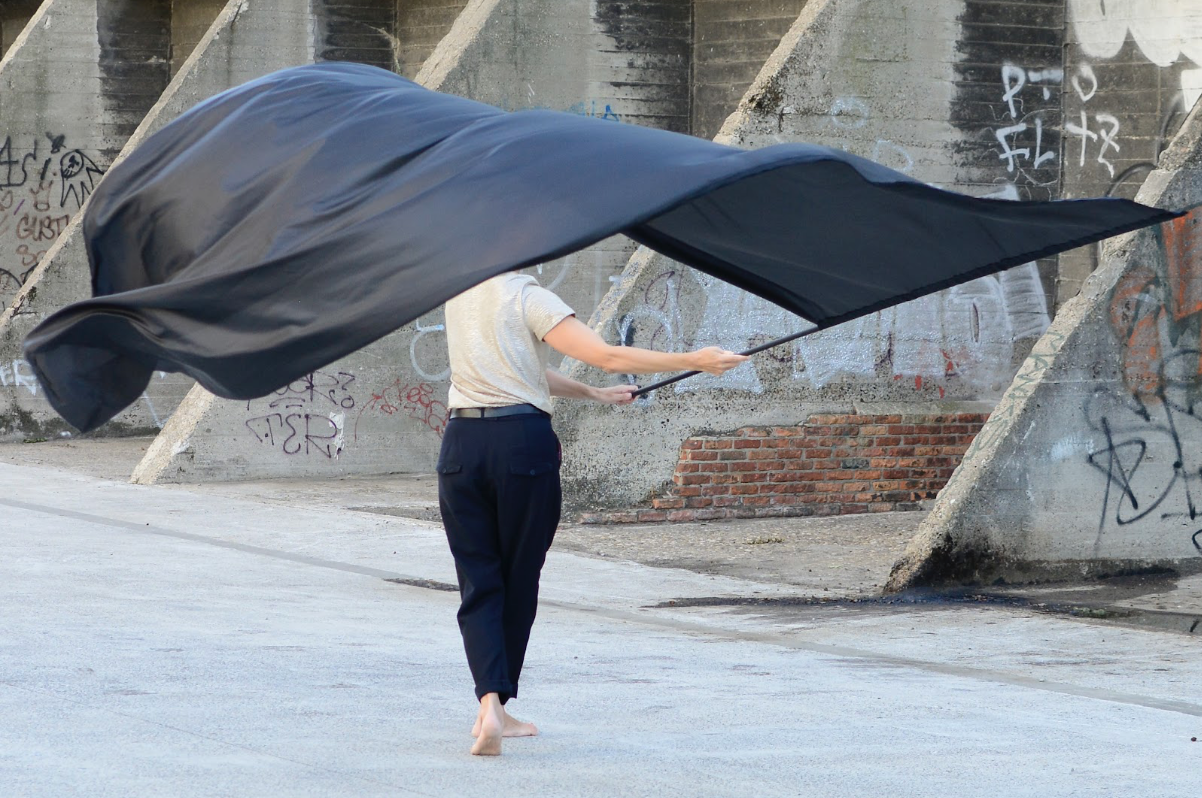
A black flag is kept in motion for hours on end. Its movement and the flapping of the fabric become both choreography and sound. Presented as a single continuous action, Relay draws its inspiration from the many recent protests taking place around the globe, among them, the mass marches in Poland, in defence of women’s rights, called “Czarny Protest” (Black Protest). The black flag cannot be linked to one particular battle and hence defies easy interpretation. Implicit references to liberation movements are counteracted by the resurgence of flags that, in our current dictatorship of fear, mainly connote exclusionary identities.
The Polish Canadian choreographer Ula Sickle and a diverse group of performers relay one another in a fascinating test of endurance. Their movements pass back and forth between inertia and hope, resistance and powerlessness. They each individually take on the responsibility to keep the flag moving, but it is the collective effort required that makes Relay such a powerful symbol. How is resistance still possible in a system that has managed to incorporate every form of opposition?
Credits:
Concept, choreography: Ula Sickle
Live sound: Yann Leguay
Performance (Amsterdam): Popol Amisi, Ula Sickle + Local guests
Also created with and performed by: Liza Baliasnaja, Sidney Barnes, Amanda Barrio Charmelo, Wei-Da Chen, Nathan Oms, Cherish Menzo, Mohamed Toukabri, Mavi Veloso
Produced by: Caravan Production
Supported by: Kunstenwerkplaats Pianofabriek & Nuit Blanche 2018
www.ulasickle.com -
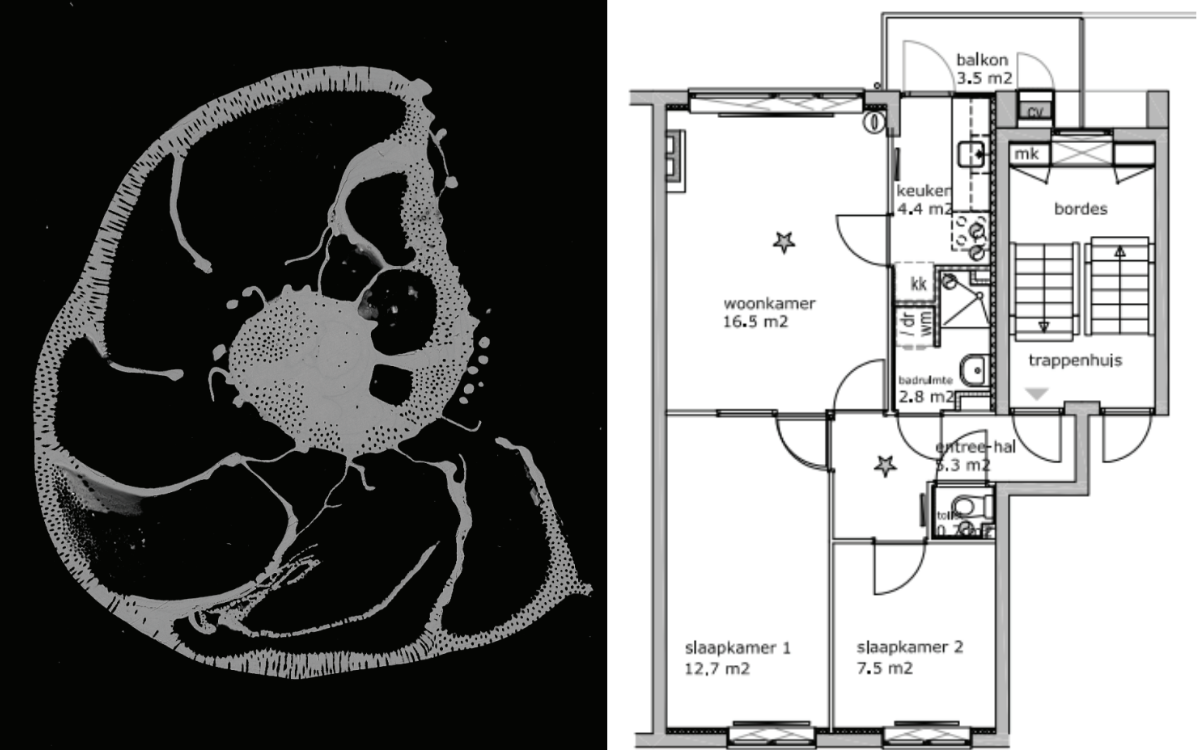
Dr. Esmee Geerken obtained a PhD in marine geochemistry at the Royal Dutch institute for Sea Research and graduated from Rietveld academy. In her talk she will compare the shells of unicellular marine creatures called 'foraminifera' with human architecture, thereby placing the relationship between the building and the body in a geological context.
-
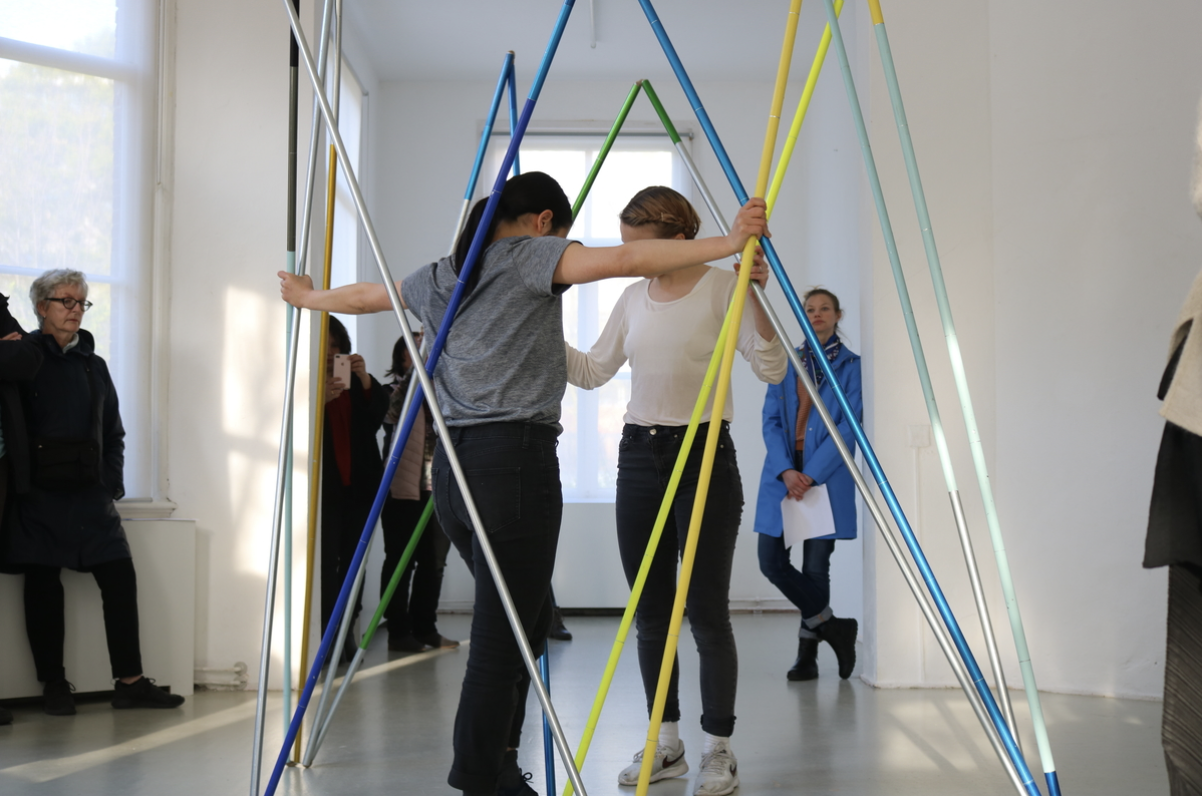
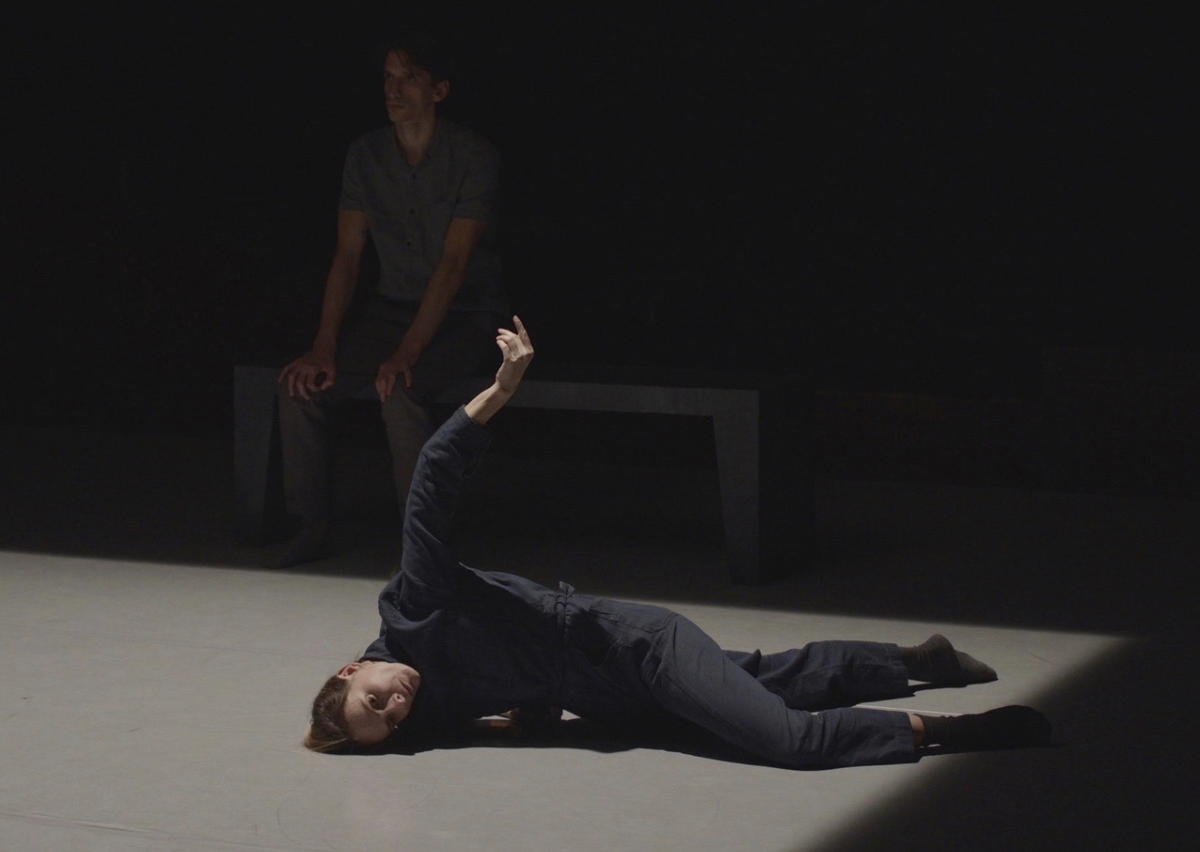
The performance Spell action #1 examines how objects set within a spatial environment interact with each other and can have a guiding effect on other bodies. An object in the space suggests how to move around it, while the space itself also determines the movement possibilities of such an object. During the performance, the structures, together with two dancers, perform a calculated choreography, simultaneously exploring the possibilities of the W139 space. Physical strength, discipline and coordinated actions are required to set those objects in motion, as well as to create a harmonious movement.
Rudolf von Laban - a dance theoretic, one of the pioneers of contemporary dance in Europe, had a strong impact on Butkutė‘s creative work and theoretical ideas. Contemplating on Laban’s movement analyses, the artist directed a choreography of objects and people in motion. The way in which an object is constructed and changed by performers forms the basis of the transformative movements from one sculptural form into the next. The constant changes in the choreography of the performance means that the installation transforms into a kinetic sculpture that invariably communicates with its surroundings.
Rūta Butkutė is a Kaunas-born artist currently living and working in Amsterdam. She studied at Vilnius Academy of Arts, Gerrit Rietveld Academy and Rijksakademie in Amsterdam. Butkutė actively organises solo exhibitions (Kaaistudios and Rosas P.A.R.T.S in Brussels, Fons Welters gallery in Amsterdam, Teruhiro Yanagihara gallery in Japan, etc.) as well as participates in group shows all over the world. The artist has also participated in various residencies and was awarded with several individual scholarships.
Credits:
choreography: Ruta Butkute
performers: Artemise Ploegaerts, Yurie Umamoto
www.rutabutkute.com -
"The water races down, through the slopes, through the rocks, through the moss. It keeps on falling, through the rocky top. As it falls, every time, at all times, a shift in perspective."
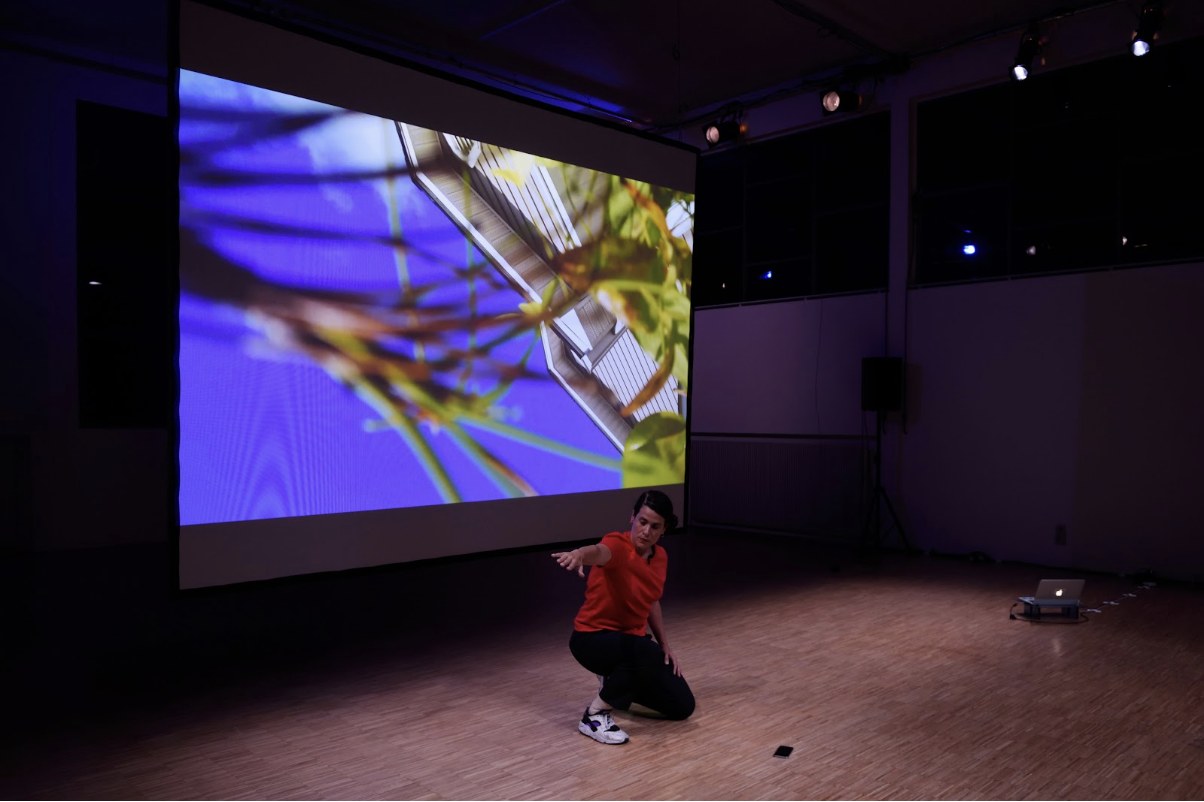
In this lecture performance, Clara Amaral explores the fall of a smartphone and the shifts in perspective that come with it. Just like a cascade that keeps on falling again and again - downward and onward - Amaral stares into the same surface in order to produce porosity, depth and poetics. Clara Amaral graduated from SNDO (Amsterdam) in 2013 and is currently doing her MA at the Dutch Art Institute. She is active as a choreographer and writer and has collaborated as a performer with Ivana Muller, Oneka von Schrader and Becket Mingwen.
Credits:
Written and performed by:
Clara Amaral
Dialogue partners: Susan Gibb, Emilio Moreno, Nienke Scholts
Sound design: Stephan Blumenschein
Stage design: Clara Amaral, Stephan Blumenschein
Light design: Mirko Lazovic’
Assistent editor: Jacob Dwyer
Produced by: Veem House for Performance
Co-produced by: Bâtard Festival and ICI-CCN de Montpellier. Occitanie as part of Life Long Burning project supported by the European commission
Supported by: Amsterdams Fonds voor de KunstResidencies: CAMPO, BUDA, CI-CCN de Montpellier
www.claraamaral.tumblr.com -
Dunja Jocic is one of the most exciting new choreographers in the Netherlands. In Resident, a young man moved into an apartment in a modern residential tower, in his quest for perfect living conditions. His apartment is equipped with the latest technologies, is in direct contact with the technology in his body and ensures that he can spend his days as efficiently as possible. But his existence in the grip of technology companies has alienated him from living outside his apartment. As the days alternate, he feels that the apartment has a strange effect on him.
Dunja Jocic (Belgrade, 1978) danced among others with Club Guy and Roni, Ballet du Nord (FR) and Emio Greco / PC. In 2013, she was nominated for the Swan "most impressive dance performance" for her role in Midnight Rising by Guy & Roni. She was nominated for a Golden Calf (2015), won the BNG Bank Dance Prize (2016) and the Prize of the Dutch Dance Days Maastricht (2018).
Credits
Choreography: Dunja Jocic
Performance: Thomas Higginson and Dunja Jocic
Dramaturgy & set design: Marinus Groothof
Text: Barbi Markovic
Light: Pavla Beranova & Marinus Groothof
Sound Design: Renger Koning
Producer: Korzo Theater The Hague, Bird Productions, Dutch Dance Days
www.dunjadjocic.com -
A dancers’ body is like an archive of choreography. Choreographer Fabienne Vegt created a performance for three excellent dancers, from the renowned Nederlands Dans Theater 1, in which they recall movements and forms that were once written on their bodies. In Scripted Space these dreamlike memories demand a hyper-aware state of mind.
In fact, everyone's body contains a wordless story - physical memories of certain patterns, encounters, measurements of spaces, moves, habits, actions, dances. As we enter a new space we carry these memories with us under our skin.
The performance will be guided by renowned improv musicians Frank Rosaly (drums), Torbjörn Zetterberg (double bass) and Cene Resnik (saxophone) and will flow into the WhyNot party. Accompanied by the beats of Salvador Breed this ending of WhyNot’s 2020 edition is an invitation for everyone to let go of all kinds of written rules (scripts).
Credits:
script & stage direction: Fabienne Vegt
dancers: Chloé Albaret, César Faria Fernandes, Marne van Opstal
musicians: Frank Rosaly, Torbjorn Zetterberg, Cene Resnik
www.fabiennevegt.com -
Salvador Breed creates and sculpts sound and technology for contexts like live performances, fashion shows, commercials, videoart and installations. Amongst his many collaborators is fashion designer Iris van Herpen, with whom he co-curated part of the Le Guess Who 2019 program.
At WhyNot he will spin records for us that he finds along the way during his long wonderings through musical worlds.
-
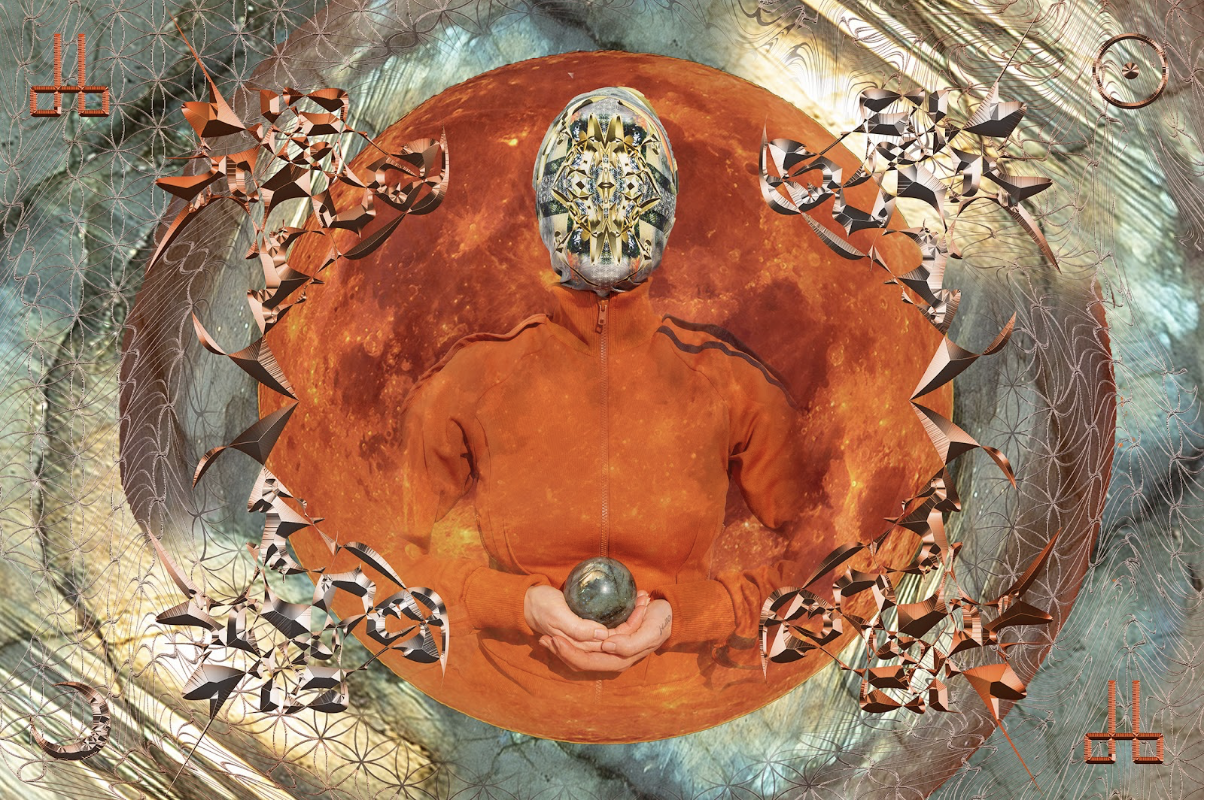
GAIA Rising is an immersive installation investigating notions of the Earth as an interconnected web of life - the planetary body - through the senses. Inside the cave-like space a guided meditation invites us to explore our relationship with other beings, matter and the Earth through our own bodies. The cave has been, since the dawn of humanity, a place of shelter and connection with the Earth, a place of rebirth and regeneration. The somatic dimension of these concepts are explored through tactile, visual, olfactory and aural motives. The soundscape is developed in collaboration with composer Eric Maltz. The work features the chant of Shaman Ibeyis Chamba Hurtado. Different iterations of the work have been shown at Ampersands W139 in Amsterdam (NL), Sonic Somatic Festival in Florence (IT) and the Bienal Internacional de Arte Amazónico in Pucallpa (PE).
Annika Kappner creates sensory scenographies in the extended field of painting, combining landscape, installation, performance, scent and sound to create glitches in perception. Her work is interested in the evolution of consciousness, the shifting perception of (self) image in relation to mental patterns and the underlying forces that shape their systemic counterparts in nature, visual culture and science. She seeks to add experiential perspectives to the contemporary relationship between human, nature and technology, addressing concepts of non-duality and otherness; to enable an emancipation of ways of sensing. She is a co-founder of the multi-disciplinary artist collective Elephants & Volcanoes.
Her work has been presented, among others, at Het Nieuwe Instituut (NL), Kunstfort Vijfhuizen (NL), Marres House for Contemporary Art Maastricht (NL), Bienal Internacional de Arte Amazónico (PE), Concordia University, Montreal (CA), National Museum of Natural History, Menton (FR), Rush Arts Gallery, New York (US), Sonic Somatic (IT) and Wallace Museum, London (UK).
Credits:
Installation: Annika Kappner
Composer & sound editor: Eric Maltz
Chant: Ibeyis Chamba Hurtado
www.annikakappner.com -
Merce Cunningham (1919-2009) was a leader of the American avant-garde throughout his seventy-year career and is considered one of the most important choreographers of all time!
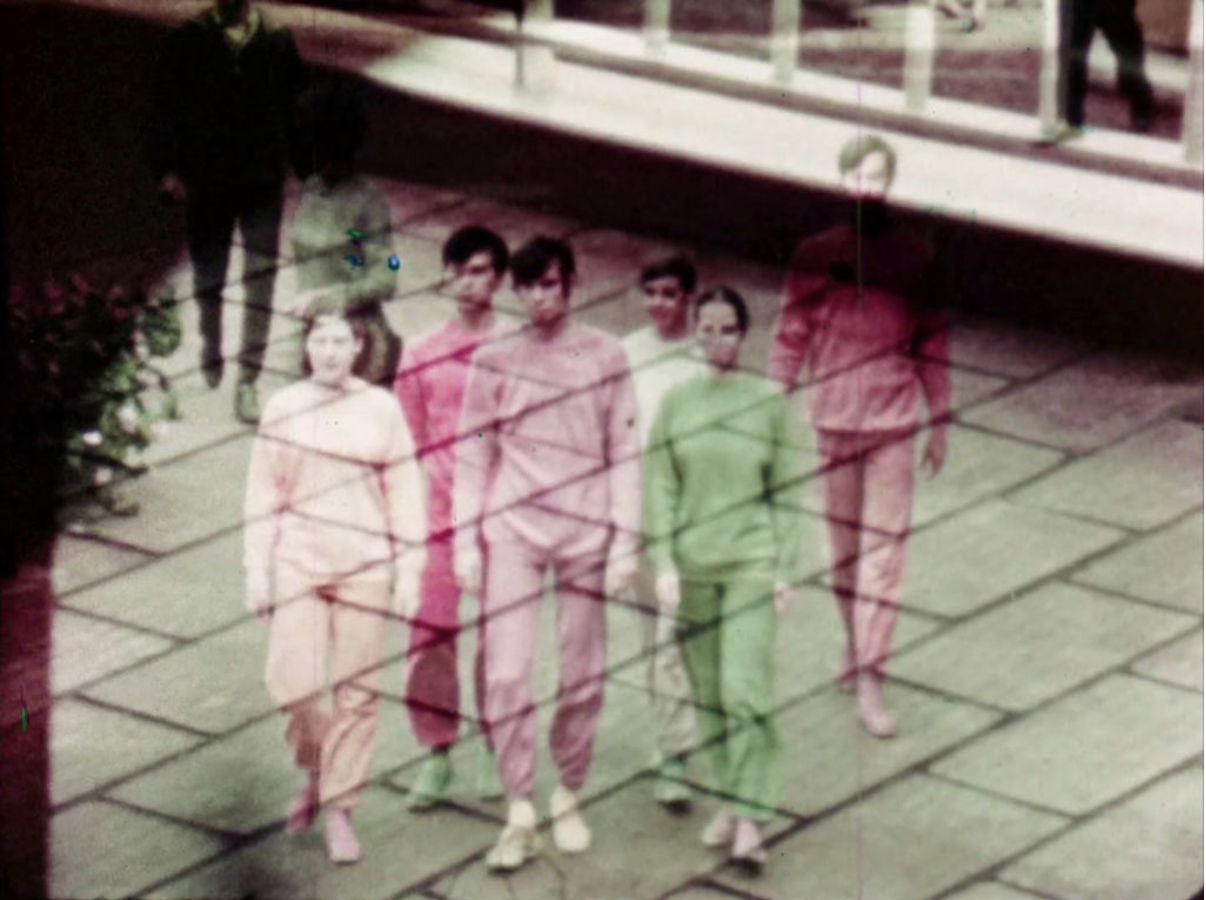
The dance film Assemblage (1968, 58′) presents a dance that unfolds across fractured space and inside shattered time. It is a recently rediscovered lost film featuring Merce Cunningham and his early dance company. A collaboration with director and former dancer Richard Moore, Assemblage features Cunningham dancing with his company in a public happening in San Francisco’s Ghirardelli Square in November 1968. Cunningham’s riveting performance, conceived from the beginning as a dance staged for the camera, is amplified by Moore’s astonishing special effects and a soundtrack by John Cage, David Tudor and Gordon Mumma. Assemblage serves as a testament to Cunningham’s groundbreaking investigations of dance and movement within the virtual spaces of film.
Credits:
Director: Richard Moore.
A film by Richard Moore. Phillip Greene, Bill Yahraus, William Winant, Bernie Stoffer, Barbara Styman. Dancers: Merce Cunningham and Dance Company, with Carolyn Brown, Sandra Neels, Valda Setterfield, Meg Harper, Susana Hayman-Chaffey, Jeff Slayton, Chase Robinson, Mel Wong. Musicians: John Cage, David Tudor, Gordon Mumma.
Producer: KQED-TV, Bay Area Educational Television, San Francisco.
A production of the KQED Film Unit. Filmed on location at Ghirardelli Square, San Francisco. This production was made possible in part through a grant from the National Endowment for the Arts. Distribution & Publicity
Text: Electronic Arts Intermixed. -
Audience placement, spatial experience and frameworks are starting points in the work of scenographer and designer Theun Mosk. His work is mainly seen in the theatre with strong roots in Boukje Schweigman's experience theater. Mosk also often works on location and makes site-specific installations. His work has become increasingly autonomous in recent years.
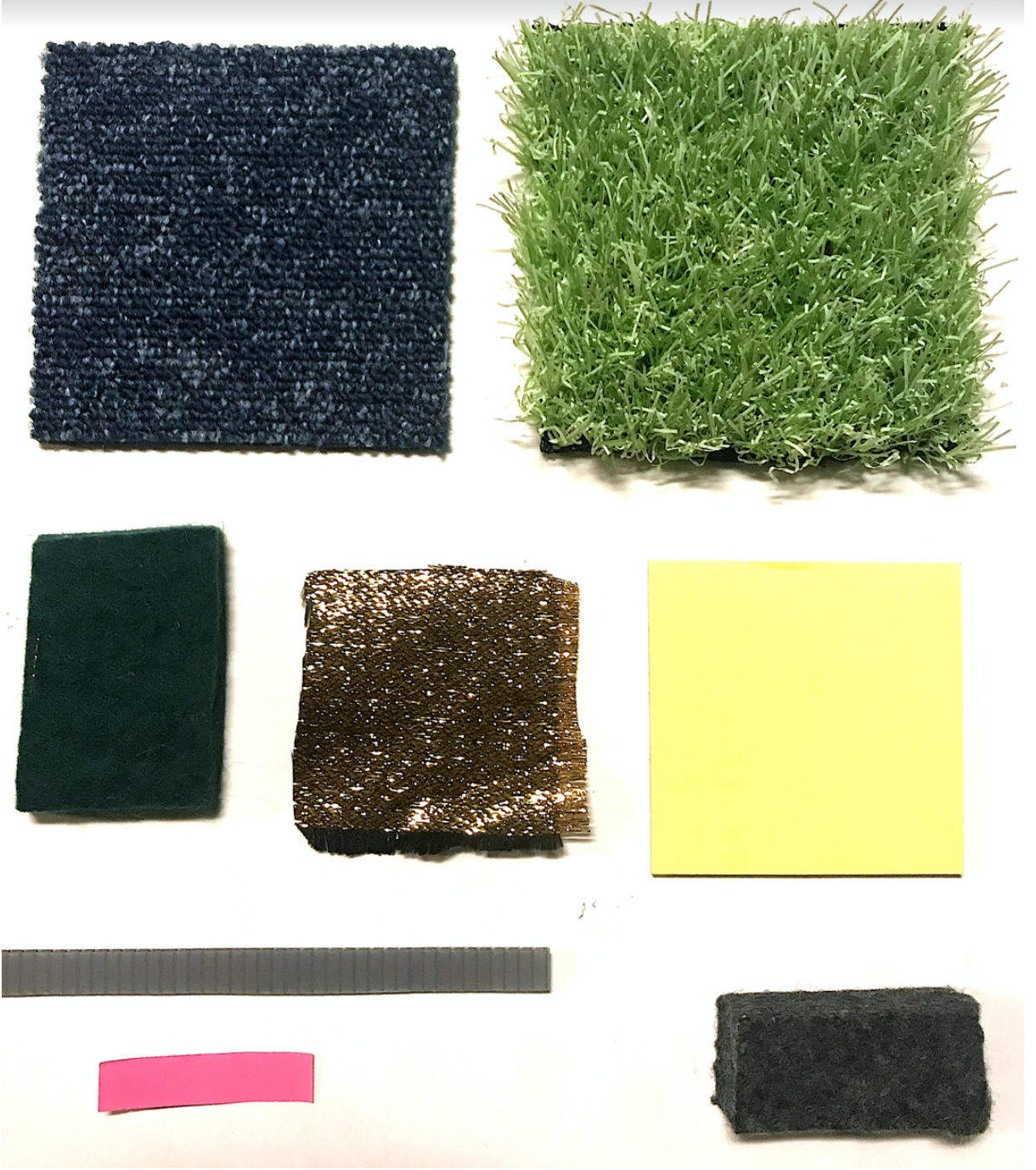
Especially for WhyNot, Theun Mosk will explore the space by working with the floor and intervening with materials, so that the public will move through the space automatically. The boundary between 'the work' and the space as it is, is being investigated. Most of the time, Mosk's work has a clear route, a start and an end like a performance, now this time span will not be there, but plenty of movement and spatial experiences.
Credits:
concept and design: Theun Mosk
dramaturgy: Jellichje Reijnders
www.theunmosk.nl